Vietnam Money, Currency Exchange, ATMs & Tipping: Avoid Counterfeit Bills, Hidden Fees & Understand North–South Culture
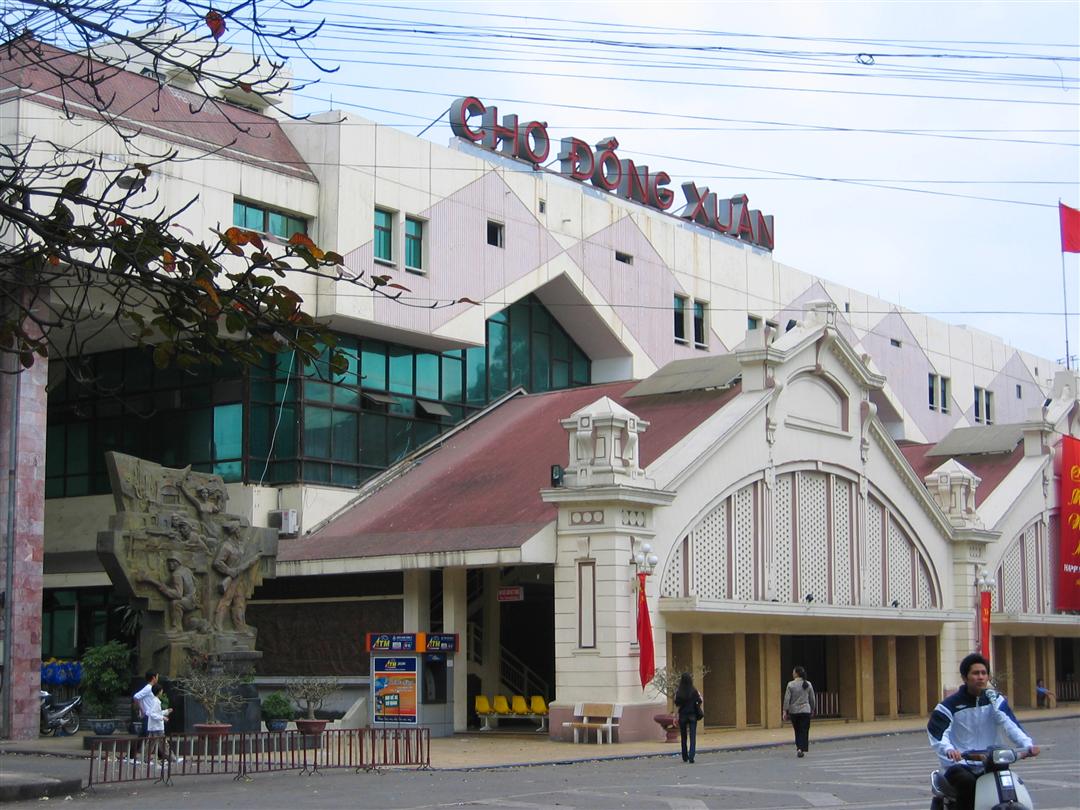
Photo Juliana Ng from Singapore · CC BY 2.0 · Resized

5-Second Summary
Exchange foreign cash at licensed commercial banks (bring your passport) to avoid counterfeit notes; withdraw the maximum limit at low-fee ATMs (VPBank, ACB) and always choose VND (Without Conversion); keep 500k and 20k notes separate; and match your tipping to both venue tier and region (upscale dining nationwide and Southern sit-down spots tip far more often than Northern street stalls).
1. Where to Exchange Money Safely (Use Banks to Avoid Counterfeit Cash)
One of the first questions travelers ask upon landing in Vietnam is whether to change cash at the airport, a jewelry shop, or a bank. For legal compliance, transparent rates, and zero risk of counterfeit or damaged bills, your safest option is always a licensed Vietnamese commercial bank.
- Commercial Banks (Best Overall Safety): Major banks such as Vietcombank, BIDV, VietinBank, ACB, and Techcombank run regulated foreign-exchange counters. Cash dispensed at bank tellers passes through commercial-grade counterfeit detectors and counting machines, eliminating fake-note or short-change risks. Tip: Bring your original passport and visit during banking hours (typically 8:00–11:30 and 13:00–16:30 Monday–Friday; select branches open Saturday morning).
- International Airport Counters: Arrival halls at Noi Bai (Hanoi) and Tan Son Nhat (Ho Chi Minh City) host licensed bank and exchange booths (Vietnam Tourism – Currency & Payments). Airport rates carry a slightly wider spread, so exchange just enough (around USD $50–$100) for your airport ride and first day, then use city bank branches for larger amounts.
- Avoid Street Touts & Unlicensed Changers: Under Vietnam's foreign-exchange regulations, currency conversion is restricted to banks and officially licensed desks displaying an Authorized Money Changer sign. Exchanging cash with unlicensed street operators near markets or border crossings carries both legal risk and high exposure to counterfeit notes or sleight-of-hand swaps.
2. Best ATMs & How to Skip the 5–10% DCC Trap
Most ATMs in Vietnam charge foreign cards between 20,000 and 55,000 VND per transaction (or ~3.3%) and cap single withdrawals between 2 million and 10 million VND. Withdrawing the maximum allowed per transaction keeps fees minimal (Using ATMs in Vietnam Guide).
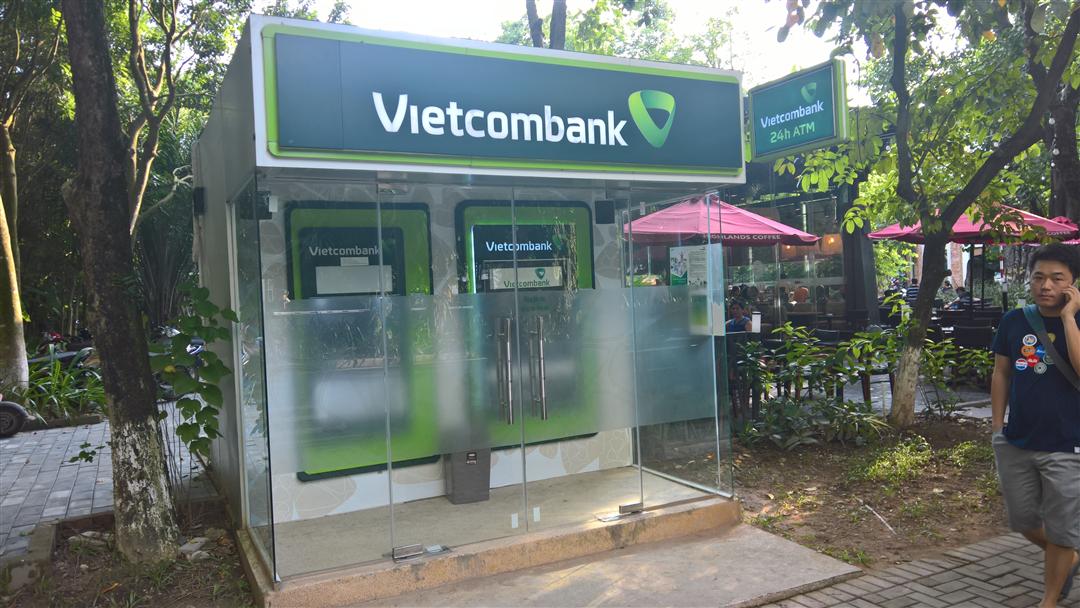
Photo Donald Trung · CC BY-SA 4.0 · Resized

| Bank | Typical Foreign-Card Fee | Max Per Withdrawal & Coverage |
|---|---|---|
| VPBank | Consistently reported fee-free | Up to 10,000,000 VND (best for large cash pulls) |
| ACB | Reported fee-free | 3,000,000 VND per withdrawal |
| Techcombank / MB Bank | ~49,500 – 50,000 VND / pull | 5,000,000 VND per withdrawal |
| Agribank | Standard fixed fee | Widest rural reach (Ha Giang, Sa Pa, Central Highlands) |
- Always Choose "Without Conversion" (Charge in VND): If an ATM or card terminal offers to convert the amount into your home currency, decline it. Dynamic Currency Conversion (DCC) rates typically cost 5% to 10% worse than the interbank rate.
- Wait for Your Card Before Walking Away: Many Vietnamese ATMs dispense cash before returning your card; leaving immediately after grabbing the bills can cause the machine to swallow your card within seconds.
- Stock Up Before Mountain Trips: ATMs are sparse in rural Ha Giang, Sa Pa valleys, and the Central Highlands. If you are planning intercity buses or trains, check our Vietnam Transport Guide so you carry enough cash for tickets and remote stops.
3. Lookalike Polymer Bills, the Two-Wallet Trick & Customs Limits
Vietnam uses no coins; circulating notes run from 1,000 VND to 500,000 VND (with 10,000 VND and up printed on durable polymer). ATMs dispense mostly 500,000 VND bills. In dim evening lighting, two lookalike pairs trip up newcomers: 20,000 vs. 500,000 VND (both blue) and 10,000 vs. 200,000 VND (both reddish-brown).
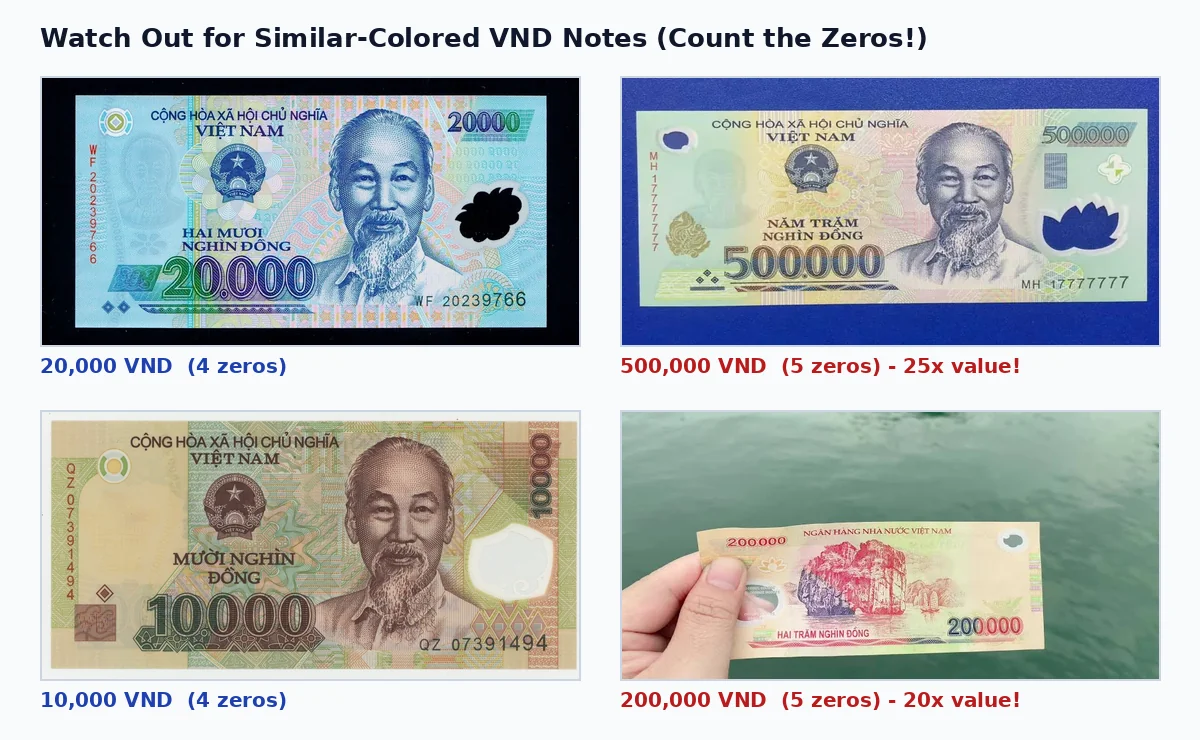
- The Two-Wallet Trick: Keep 500,000 VND notes and backup cards tucked safely inside a zippered main wallet or hotel safe; carry a small day wallet stocked with 10,000–100,000 VND bills for street food, coffee, and short rides. Break 500k bills easily at supermarkets or convenience stores (Circle K, WinMart+, GS25).
- Quick Genuine-Note Check: Authentic Vietnamese polymer notes feature a crisp transparent window with embossed denomination numbers, a clear watermark portrait when held to light, and color-shifting ink on the front.
- Customs Cash Declaration: Travelers entering or exiting Vietnam with more than USD $5,000 (or equivalent foreign currency) or over 15,000,000 VND in cash must declare it to border customs (Vietnam Law & Legal Forum).
4. Cards, Apple Pay, 2–3% Surcharges, VietQR & Everyday Prices
You do not need to carry 100% cash in Vietnam, but cash remains essential alongside your cards because local payments split into two distinct tiers:
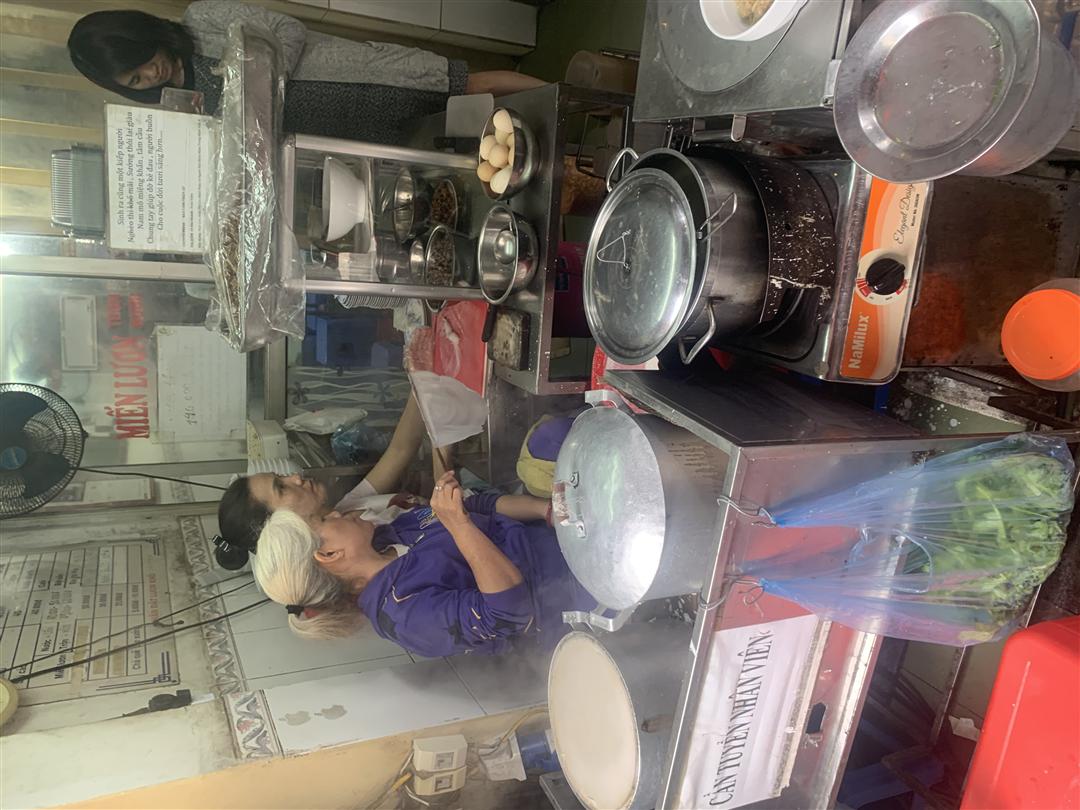
Photo Martin Lewison from Forest Hills, NY, U.S.A. · CC BY 2.0 · Resized

- Visa, Mastercard & Apple Pay / Google Pay: Widely accepted at hotels, shopping malls, supermarkets, coffee chains, mid-range to upscale restaurants, and ride-hailing apps like Grab. Note that small boutiques, tailors, and local tour desks often add a 2–3% card processing surcharge—ask before tapping.
- VietQR vs. Foreign Visitors: Nearly every street stall and market vendor displays a VietQR bank-transfer code, but domestic VietQR requires a Vietnamese bank account. Cross-border QR options (VietQRGlobal) are expanding for select partner countries, yet most international travelers still rely on cash or cards.
Everyday Price Reality Check (Reference)
| Common Expense | Typical Price (VND) | Best Way to Pay |
|---|---|---|
| Street iced milk coffee / Banh mi | 25,000 – 45,000 VND | Cash (10k–50k notes) |
| Bowl of pho / Bun cha at a local eatery | 45,000 – 75,000 VND | Cash |
| Sit-down regional restaurant meal | 150,000 – 400,000 VND / person | Cash or Card / Apple Pay |
| Airport GrabCar to city center (Hanoi / HCMC) | 180,000 – 380,000 VND | Card linked in Grab app |
| Museum / Heritage site entry ticket | 40,000 – 150,000 VND | Cash or Card at official ticket booth |
5. Tipping Etiquette: Upscale Dining & North vs. South Culture
Many generic travel blogs claim "There is no tipping in Vietnam." On the ground, tipping depends heavily on restaurant tier and region:
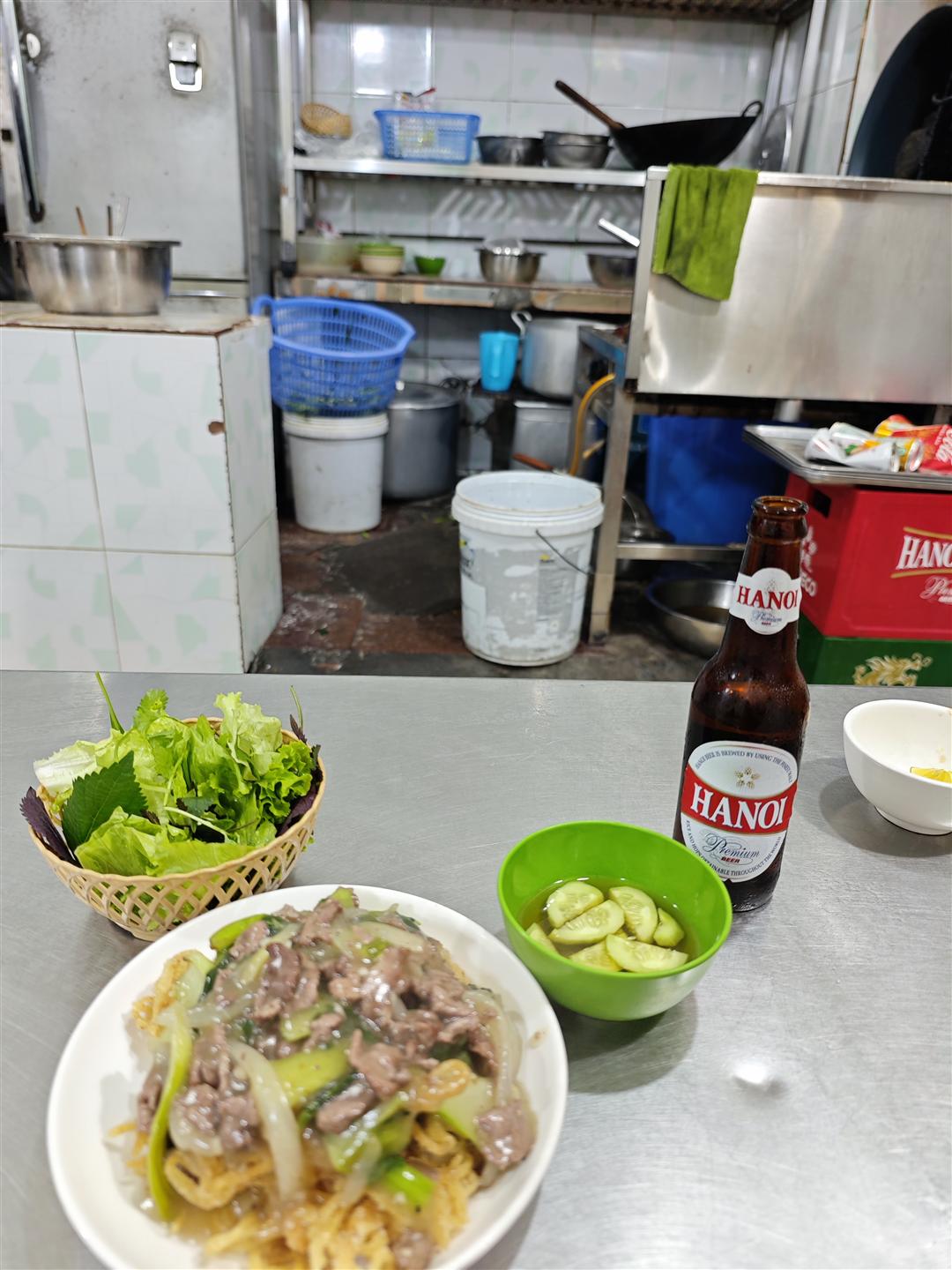
Photo FrogsLegs71 · CC BY-SA 3.0 · Resized

| Situation / Region | Is Tipping Expected? | Practical Amount |
|---|---|---|
| Northern Casual / Street Food (Hanoi) | No | Pay the exact menu or quoted price. |
| Southern Sit-Down Restaurants & Cafés (HCMC) | Optional, but very common | Leaving small change (10,000 – 30,000 VND) or tipping attentive servers is a warm local habit. |
| Upscale / Fine-Dining Nationwide | Yes | 5–10% of the bill (check first if a 5% service charge is already included). |
| Grab / Taxis | No | Round up cash fares or tip via the app during heavy rain/traffic. |
| Hotel Bellboy / Housekeeping (4–5 Star) | Appreciated | 20,000 – 50,000 VND for heavy luggage assistance. |
| Private Tour Guide & Driver | Yes (industry norm) | Guide: ~150,000 – 250,000 VND/day; Driver: ~100,000 – 150,000 VND/day. |
| Mid-Range to Luxury Spa / Massage | Yes | 50,000 – 100,000 VND per therapist (or per salon guidance). |
6. Emergency Playbook (Swallowed ATM Cards & Wrong Change)
- If an ATM Swallows Your Card: Do not walk away right away. Photograph the ATM ID number and note the exact time, then call the bank hotline printed on the machine. If the ATM is attached to a bank branch during business hours, step inside with your passport to request retrieval. Simultaneously freeze the card inside your home banking app.
- Avoiding Short-Change or Note Confusion: Count your change at the counter before leaving, and hold the banknote clearly visible when handing over 200k or 500k bills in busy spots.
- Planning Your Full Trip: Pair this money guide with our First Time in Vietnam Guide and Vietnam Weather & Best Time to Visit to budget smoothly across regions.
7. Frequently Asked Questions
1. Where is the safest place to exchange money in Vietnam to avoid counterfeit bills?
Bring your passport to major commercial banks (Vietcombank, BIDV, VietinBank, ACB) or licensed airport arrival counters. Avoid street touts and unlicensed exchangers.
2. Should I choose "With Conversion" or "Without Conversion" at a Vietnamese ATM?
Always choose "Without Conversion" (VND) to avoid losing 5–10% on unfavorable DCC exchange rates.
3. Do I need 100% cash in Vietnam?
No, but carry both cards (Visa/Mastercard, Apple Pay) and VND cash—street stalls, local markets, and remote areas still rely on cash.
4. Is tipping expected in Vietnam, and how do North and South differ?
Northern street stalls do not expect tips, whereas upscale restaurants nationwide expect 5–10% (unless service charge is included) and Southern Vietnam (Ho Chi Minh City) has a much warmer culture of tipping servers at sit-down spots.
5. What should I do if an ATM swallows my card?
Photograph the ATM ID, call the hotline on the machine (or enter the attached branch with your passport during business hours), and freeze your card in your banking app.
Author Note: Independently researched and field-checked by van-anh-tuixinh with zero sponsorships. Read more on our About page or reach out at tuidep1986@gmail.com.