Ha Giang Loop vs Hoang Su Phi: which route should you choose?
Short answer: Choose the eastern Ha Giang Loop for the limestone plateau, mountain passes and Nho Que canyon. Choose Hoang Su Phi for terraced rice fields, village stays and walking. These are separate road corridors; they are not two names for one short circuit.
Eastern Loop: dramatic roads and limestone landscapes
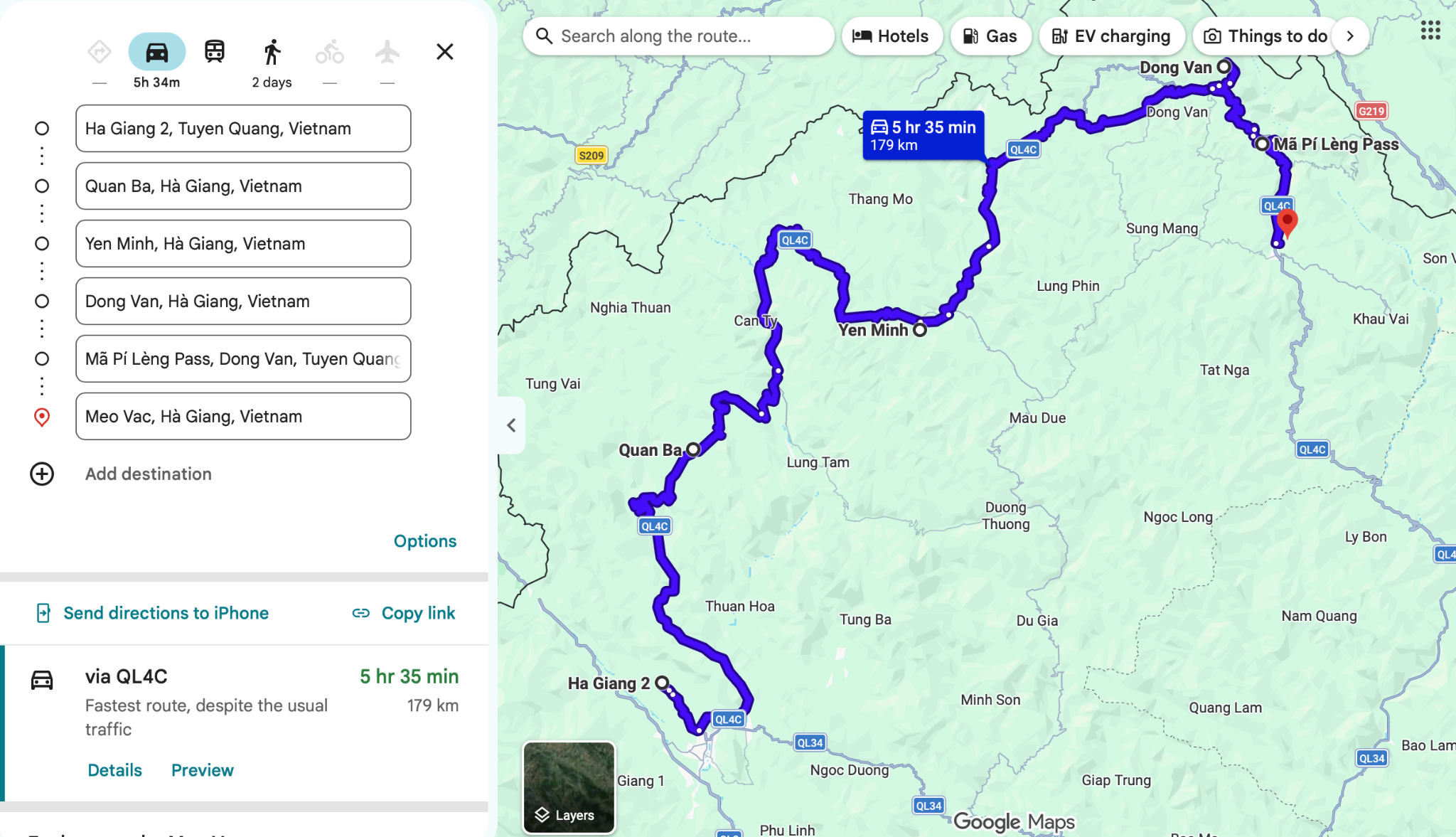
The classic eastern corridor links Quan Ba, Yen Minh, Dong Van, Ma Pi Leng and Meo Vac. Travellers come for mountain views, villages and the sense of moving through a high limestone plateau. Four days allows a more comfortable route than compressing every stop into two or three, although driving time depends on conditions and exact pickup points.
Nho Que boat trips are optional. Weather, pier access and boat schedules can alter the day, so ask the operator about the current plan before setting off. A foggy pass is a reason to choose a village visit or extra rest, not to drive faster to find a photograph.
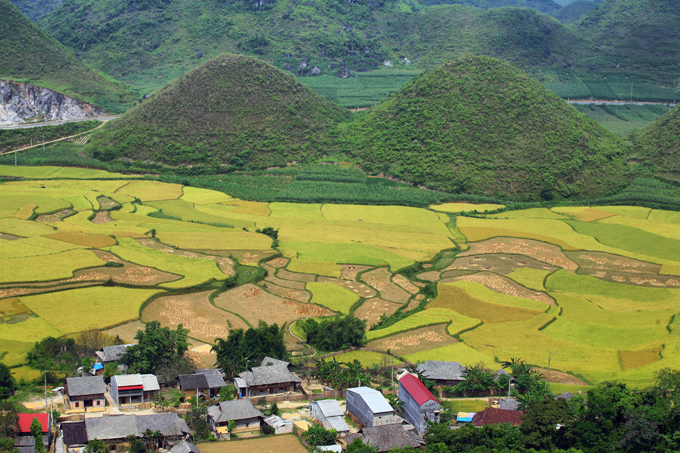
Photo: Lee Lio · CC BY 2.0 · Source · License.
Hoang Su Phi: rice terraces and village life
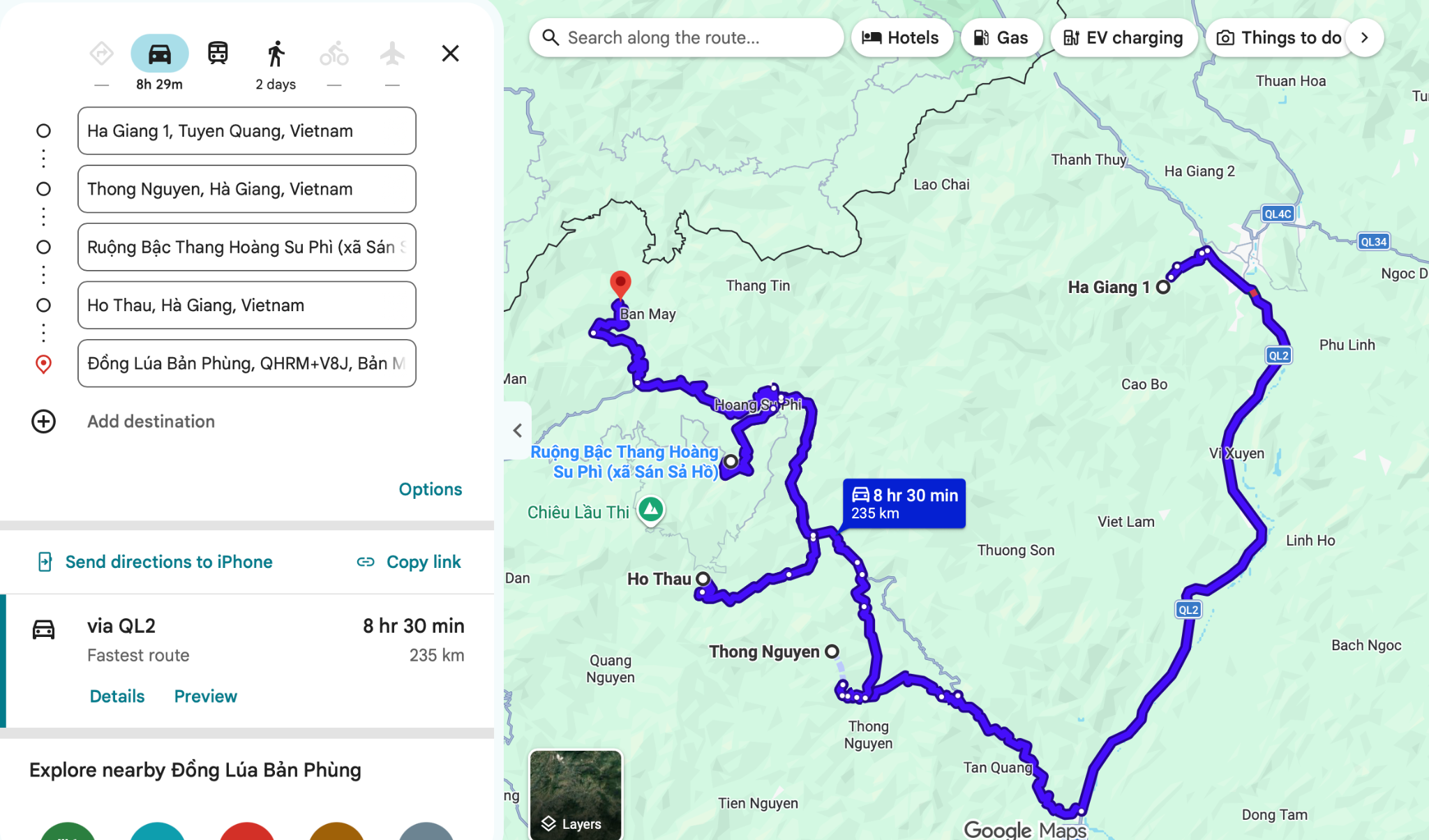
The west rewards travellers who want a slower stay with walks near cultivated terraces and time in local communities. Three days can provide an arrival day, a full walking day and an unhurried departure. Choose accommodation near the area you actually want to explore; western villages are not all a short drive from one central stop.
The rice changes with the agricultural season and elevation. Golden harvest images online do not guarantee the same colour on a particular date. Ask a local host for current field conditions and walking accessibility before confirming your itinerary.
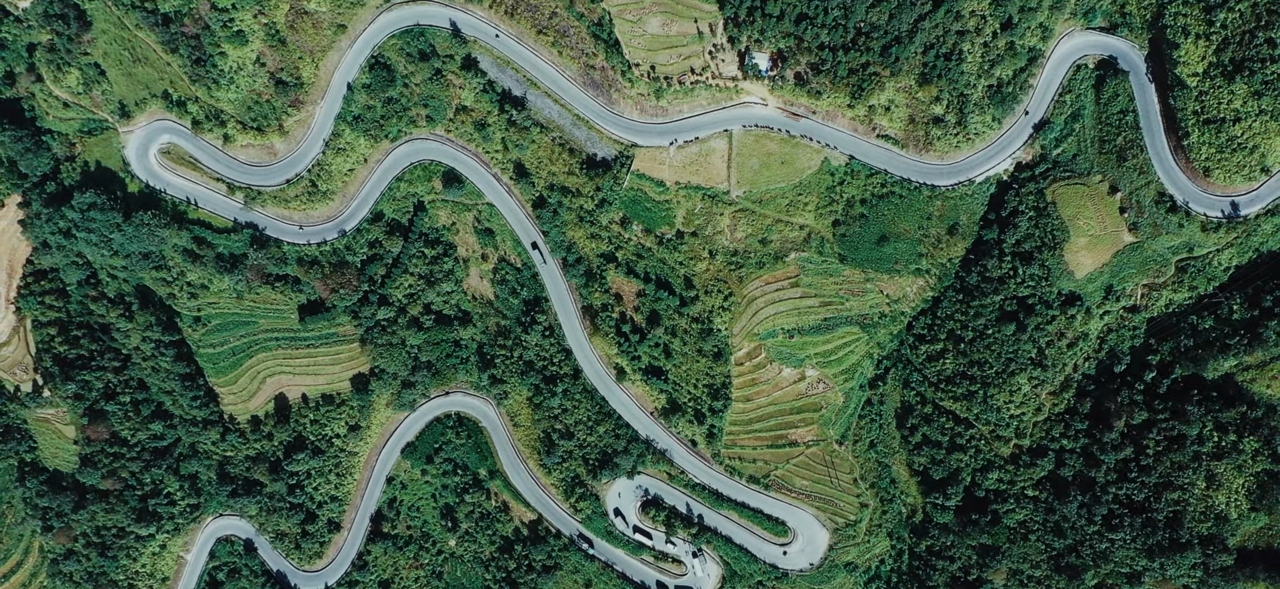
Photo: Cat Studio · CC BY 3.0 · Source · License.
Three, four or seven days?
Three days: focus on the west, or accept a shortened eastern route. Four days: a useful framework for the eastern Loop with breaks and one optional activity. Six to seven days: consider both areas only if there is enough time for the cross-region transfer. Travel between Hanoi and the highlands may consume additional hours or days depending on your operator's definitions.
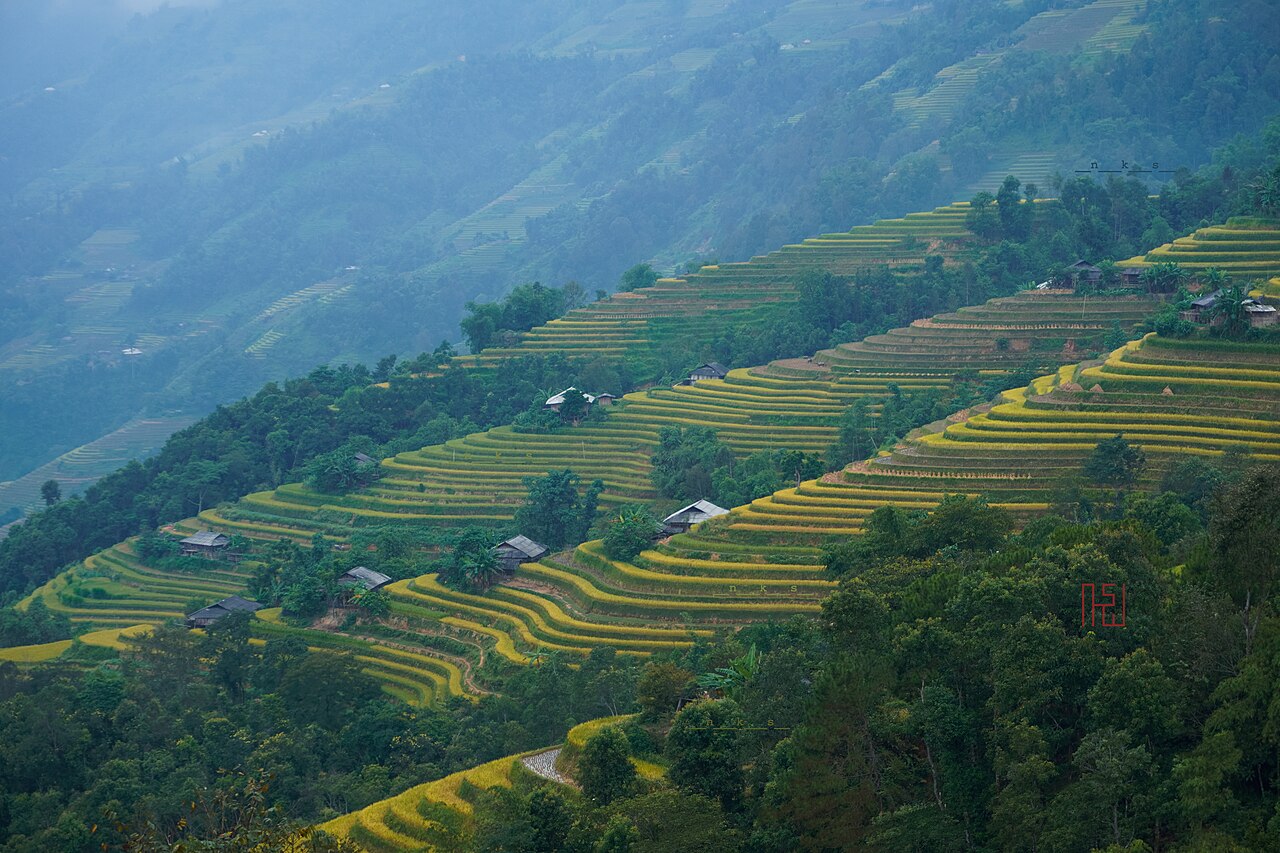
Photo: NKSTTSSHNVN · CC BY-SA 4.0 · Wikimedia Commons. Source.
Which is better for families and non-riders?
Neither is automatically easy: mountain bends, long road stretches and weather affect everyone. A car and experienced driver avoids self-riding, but check child seats, luggage capacity, room layouts and realistic time in the vehicle. Your driver may not be a licensed English-speaking sightseeing guide.
Choose East when the road and canyon are your main interests; choose West when terraces and village walks matter more. A balanced plan leaves room for a missed boat or clouded view without spoiling the entire holiday.
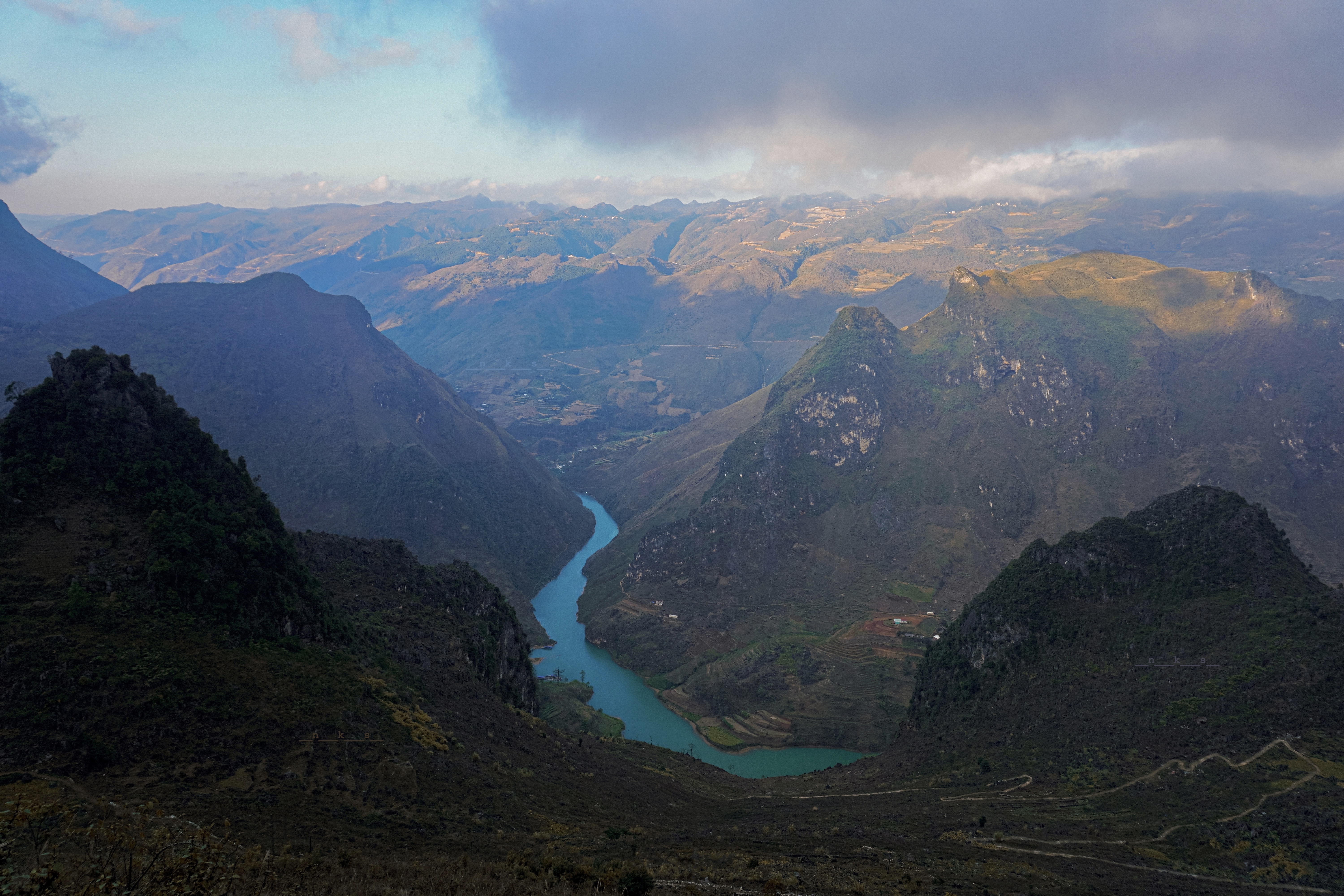
Photo: NKSTTSSHNVN · CC BY-SA 4.0 · Source · License.
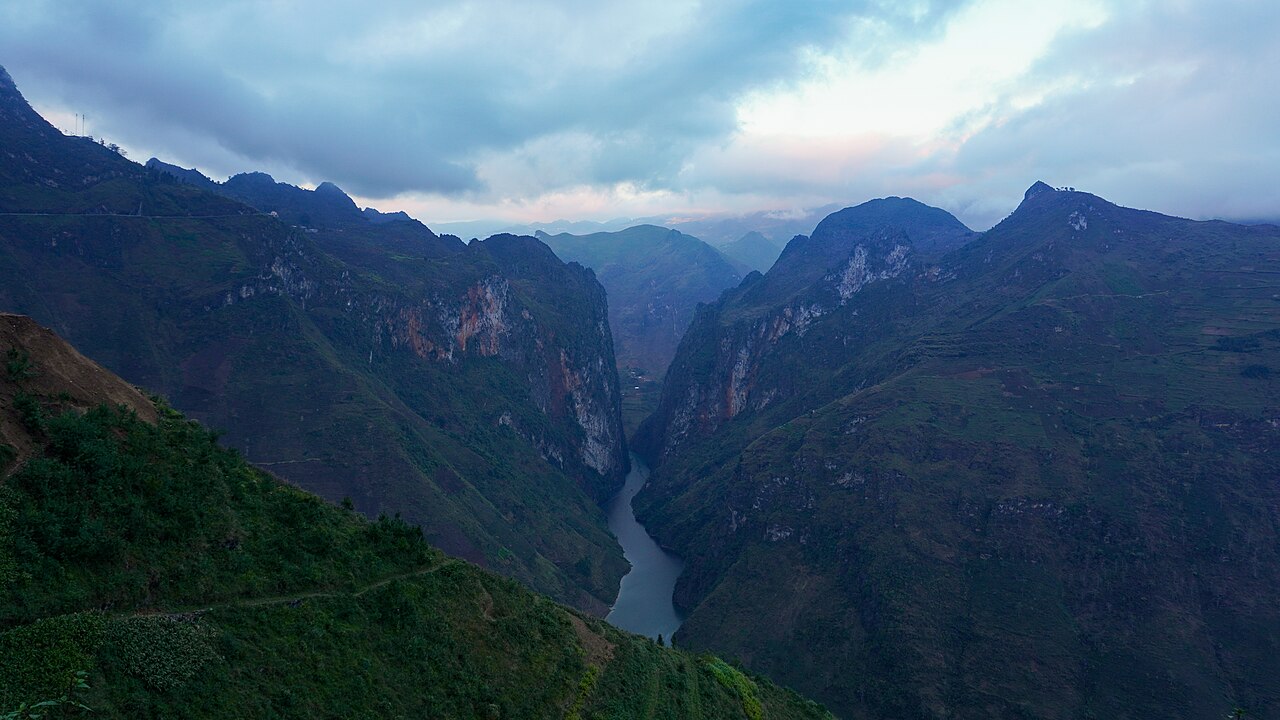
Photo: NKSTTSSHNVN · CC BY-SA 4.0 · Source · License.
USD budget by route and group
These are total group estimates for private-car travel, including accommodation, ordinary meals, modest activities and 10–15% contingency, not confirmed tour selling prices. East, 4 days: solo $1,050–1,270; couple $1,130–1,430; family of four $1,240–1,750. The specific published vehicle reference is $880 sedan or $905 seven-seat for the eastern four-day route. West, 3 days: solo $660–780; couple $740–900; family $930–1,150. Western car totals use a daily driver tariff extrapolation, not a dated quote for that exact road. Family amounts depend on children's ages and room arrangements.
Three direct car-rental price references
The published seven-seat, four-day vehicle figures range from about $262 to $905, but these are not identical all-inclusive services. Do not treat the cheapest headline as the tour's confirmed minimum.
- My Tam: VND 6,900,000 (about $262), with a stated route and mileage limit; driver meals or overnight room may cost extra. Direct rental source.
- Van Hai: VND 7–10 million (about $266–380), subject to mileage, overtime, VAT and driver-expense conditions. Direct rental source.
- RideVN: $905, for a specified four-day Hanoi–Ha Giang Loop–Hanoi vehicle service; its published inclusions cover driver, fuel, tolls, parking and driver accommodation. Direct rental source.
Why the difference? The routes, included kilometres and excluded charges are not standardized. Compare written quotes for the same dates, pickup, road mileage, vehicle seats, fuel, taxes, tolls and driver costs. The eastern family total above uses the more inclusive $905 vehicle assumption. A lower total remains pending a comparable written vehicle quotation; four-day east prices do not apply automatically to western or longer routes.
Other direct cost checks: Hoang Su Phi Lodge lists VND 1,512,000 for a double room, VND 2,305,000 for a four-person bungalow, lunch $10 and dinner $12. The provincial portal lists Nho Que boat reference fares of VND 120,000/adult and VND 60,000/child. Budget guesthouse and everyday meal ranges are assumptions until properties confirm them. Approximate VND conversion uses 26,300 VND/$1 as an illustration, not a guaranteed exchange rate. Flights, visas, insurance and separately hired guides are excluded.
Maps and route orientation
Related Northern Vietnam articles
- Ba Be Lake: the waterways and how to plan them
- Tam Thanh Cave: culture and geology in Lang Son
- Ba Be Lake: choosing one day or two
- Ba Be to Ban Gioc: a separate northern itinerary
Photo and fact sources
UNESCO Dong Van Geopark · Vietnam Tourism terrace guide · Vietnam Government merger notice. Commons photographs retain the cited authors and their original CC terms. User-supplied original photographs, where used, retain their creator's copyright and are not newly assigned CC licences. The signed road photograph requires separate permission verification before publication.